Learning from those who have built it before
Bringing together innovators from the University of Zurich, this year’s Innovator Morning Summer Edition focused on one of the biggest challenges for founders: building on research insights to develop a product that people actually want. Through founder stories, insights from the Market Validation Lab and honest conversations about entrepreneurship, participants gained practical advice from those who have experienced the journey firsthand.
In his keynote, Gaudenz Halter, Co-Founder of Correntics, reflected on the company's journey. It has been five years since the project was supported by the UZH Innovation Hub. Now his company has grown into a startup with paying customers, helping businesses analyze and predict climate risks through research-based technology designed to make complex science accessible and actionable. Looking back, Halter described entrepreneurship as a rollercoaster, with one lesson standing out:
.png)
«Don't become too attached to Plan A. Instead, founders should define early what success looks like to them, define when a strategy has failed and at what point it is time to switch to Plan B – or even Plan C.»
Réka Enz and Akhila Obilisetty, Market Validation Lab participants, looked back on their journey, challenges and key learnings along the way:
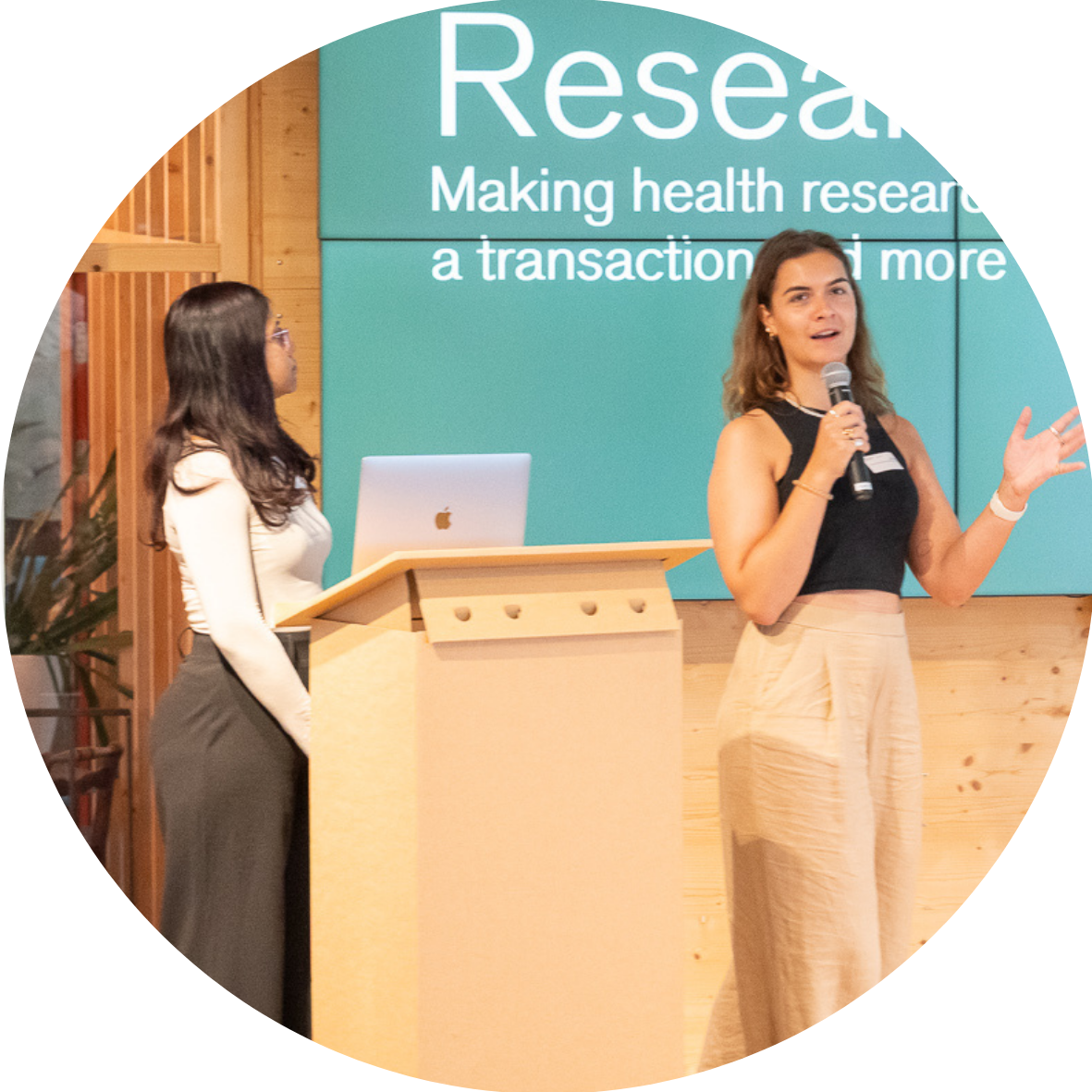
«Many projects begin with a convincing idea, but conversations with potential users often reveal that the real problem to be solved is different to what is initially assumed. Ideas that seem convincing in the lab do not necessarily solve the real problem».
Their learning: engage with users and customers as early as possible and build solutions with them, rather than for them. Early conversations help validate assumptions before investing valuable time and resources in the wrong solution.
In a founder interview, Kynan Eng, who successfully exited his startup iniVation, discussed how early strategic decisions shape the future of a company. While many founders focus on fundraising, Eng encouraged entrepreneurs to think just as early about the kind of company they ultimately want to build. «The type of exit you plan for shapes the company you build," he explained. His closing advice focused on self-awareness:
.png)
«Every founding team brings its own strengths, motivations and ambitions. Successful founders understand not only what they are good at, but also what they should delegate. Some excel at building companies from zero to one, while others thrive in scaling organisations. Knowing your strengths, and continuously challenging your own assumptions, is just as important as refining your product.»
Across all sessions, one message stood out: successful startups are not built by following a fixed formula, but by staying close to customers, adapting quickly and understanding both the market and yourself.